 01
01 02
02 03
03 04
04Sections
Position an industrial biotech company around the product a buyer can specify, qualify and purchase, and use the production platform as the evidence for why that product is better, cheaper or more secure. Buyers of chemicals, materials, feed and ingredients buy inputs that have to fit an operation that already runs. The organism, the strain and the fermenter matter to them once they explain a difference the buyer already cares about. The platform can be the moat. The product still needs to be the front door.
What does an industrial biotech buyer actually buy?
A procurement lead at a feed mill, a chemicals company or an ingredients business buys an input with a specification, a price, a delivery schedule and a qualification history. They answer to a plant manager who needs the line to run on Monday and to a finance team that will compare your price with last year's contract. The platform is usually the founder's proudest work and the thing that took the most years to build. The buyer reads it as a method of production, which is interesting and slightly beside the point.
The mechanism earns a place in the story when it explains a difference in performance, cost in use, purity, functionality, supply security, feedstock exposure or footprint. Without that bridge the buyer has to do the commercial translation alone, and most stop before they finish. If you need a plain-language primer for readers new to the field, start with what industrial biotechnology is and how to explain it.
Policy has moved in the same direction as buyers. In 2022 the White House launched a National Biotechnology and Biomanufacturing Initiative, putting manufacturing next to research in the name of the programme. In 2026 the European Commission sought feedback on industrial biotechnology and biomanufacturing ahead of further EU biotech legislation. Buyers hear a similar message from their own supply teams. The question they bring to a first meeting is whether a product can be made, delivered and paid for at a known specification.
Unibio: lead with protein, let the technology prove it
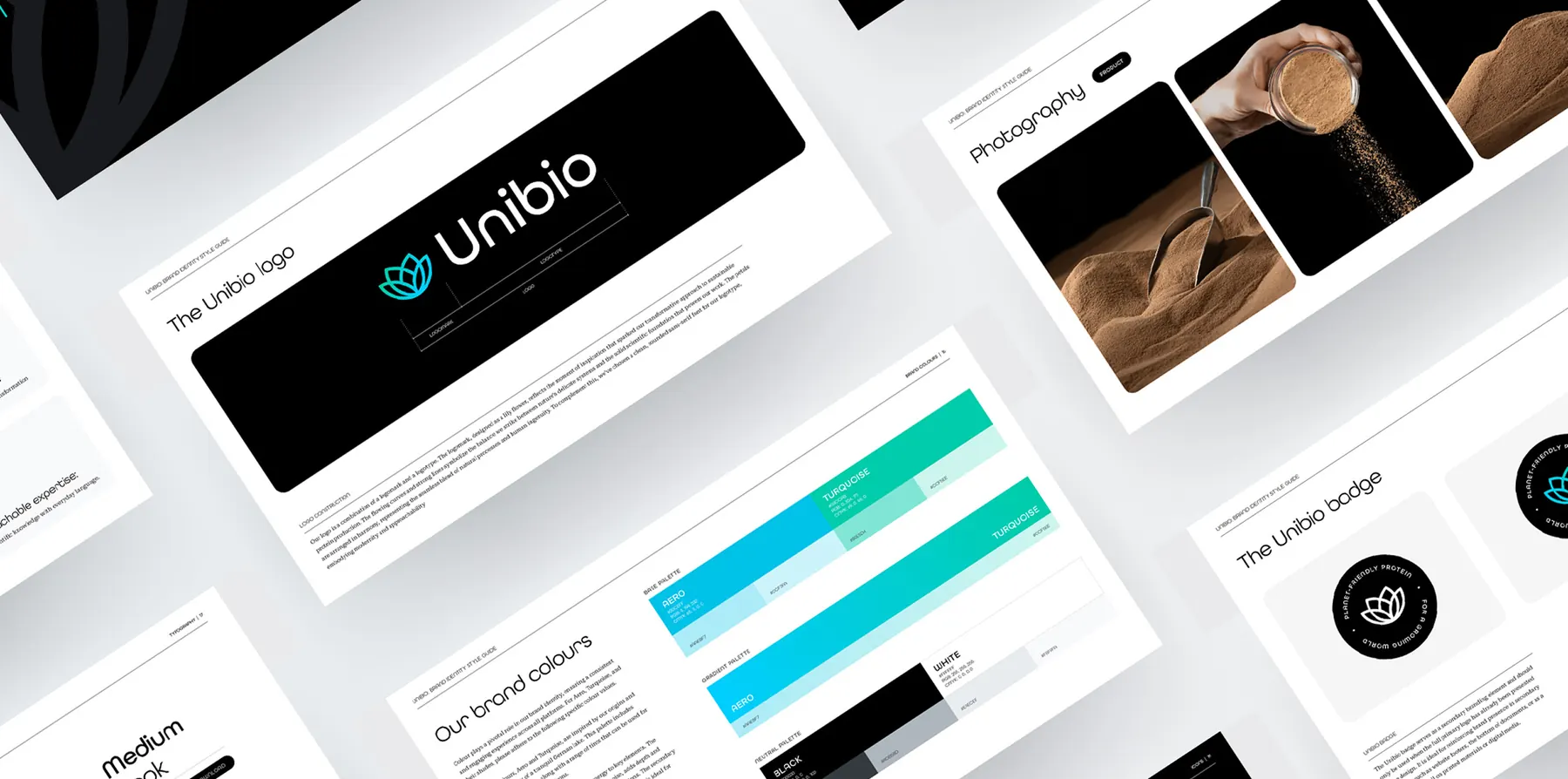
Unibio uses gas fermentation to produce protein for animal feed. The technology is a real engineering achievement and the easiest thing in the company to talk about. Brighter Future ran leadership workshops with the team and repositioned the company around the protein product, with the technology as the evidence. The line that came out of that work was "Lead with protein. Let the technology prove it."
The identity and the website were then built for three audiences, investors, feed producers and partners. A feed producer reads application, specification and supply first. An investor reads the protein market and then the production advantage. A partner reads what integration would involve. Each route opens on what the protein does for that reader before it explains how the protein is made. The full Unibio case shows how the same fact base serves all three once the product sits at the centre.
Choose one product wedge
A platform company can usually name dozens of theoretical outputs. Buyers need one they can evaluate, and a sales team needs one it can quote. Pick a single commercial wedge with a defined buyer, a clear application, measurable performance criteria, plausible economics, a regulatory path where one applies and a route to supply. The wedge makes the present buyable, and it can be a small part of the long-term plan.
Researchers have started to define minimum viable products in precision fermentation as translational milestones for food biotechnology. The framing travels well beyond food. A minimum viable product in industrial biotech is the first output that meets a real buyer's specification at a volume they can test, and positioning should be built around it.
Map the incumbent and the cost of switching
Every industrial biotech product replaces something. The incumbent may be a petrochemical, an agricultural commodity, an imported ingredient or simply the supplier the buyer has used for fifteen years. Being biological gives the buyer no reason on its own to change. Switching has to be rational, and that means understanding qualification trials, supply contracts, price, compatibility with existing equipment, production risk and the internal procurement process.
Regulation sits inside the switching cost for feed, food and many materials. The OECD has published a comparison of the innovation and regulatory environments for biotechnology and biosolutions across the European Union and the United States. The practical lesson for positioning is simple. Say which market the product is cleared for, which it is pending in and which it has not entered, because the buyer's legal team will ask.
Label maturity and impact honestly
Industrial biotech decks often blur four stages, scientifically possible, demonstrated, pilot-produced and commercially available. Label each one. A pipeline slide that puts an early research output next to a qualified, suppliable product makes the whole page less credible, including the parts that are true. Maturity is part of the position.
Environmental claims need the same discipline. A biological production route may reduce emissions, waste, land pressure or fossil dependence, and none of those outcomes follow automatically. Define the comparison. Name the incumbent, the system boundary, the energy mix, the feedstock and the life-cycle stage. "Bio-based" describes how something is made and leaves the impact question open.
Where the platform belongs
Once the product is credible, the platform becomes the expansion story. Show what the same organism or process can produce next, whether the system can shift feedstocks, whether the manufacturing assets can support a product family and how accumulated know-how shortens development time. Each of those claims is easier to believe when it is anchored in one product a customer has already qualified.
Investors often need a reverse zoom. They start with the wedge, then move out to the platform, the product family and the economics of the next plant. The first product proves a route into the platform, and the first plant creates evidence for the next one. The expansion should grow out of the wedge and keep it in view. The broader argument for B2B climate and biotech buyers is set out in technology versus product, and the food-specific version in platform versus product in food tech.
How to test your own positioning
Rebuild the buyer-facing story in this order and check that each step has evidence behind it.
- Pressure, meaning what changed in the buyer's world.
- Current input, meaning what they use today.
- Product, meaning what you offer and in what form.
- Value, meaning why it is better for this application.
- Proof, meaning what has been demonstrated and at what scale.
- Integration, meaning what adoption requires on their side.
- Supply, meaning what you can deliver now and later.
- Platform, meaning how the capability widens the opportunity.
That sequence keeps the science in the story and leaves the product to do the selling. Then run a short test. Show a prospective buyer your first page and ask them to describe the company in one sentence. If they say "they have a fermentation platform", the product is still hidden. If they can name the output, the application and why it matters to them, the position has a commercial centre. If the answers come back mixed, our positioning work starts there.
Sources and further reading
- Fact sheet on the National Biotechnology and Biomanufacturing Initiative, The White House, 2022
- Commission seeks feedback on industrial biotechnology and biomanufacturing, European Commission, 2026
- A comparison of the innovation and regulatory environments for biotechnology and biosolutions across the EU and the US, OECD
- Minimum viable products in precision fermentation, Current Opinion in Biotechnology, 2026
Tell us what needs to move.
Bring the brief if it is clear. If it is unclear, tell us where the work is stuck.
Bring us the problem