 01
01

 02
02 03
03 04
04Positioning decides what the company is, for whom and in which frame
Climate tech positioning is the strategic decision about what a company is, who it serves first and which market frame each audience should judge it in. Brighter Future Studio makes that decision with the leadership team, then turns it into the language and stories that carry it to investors, buyers, partners, regulators and recruits.
Three parts of one decision
- Category
The shelf the market puts the company on.
- Value proposition
What changes for the buyer who chooses it.
- Frame
The problem each audience measures the company against.
Each part depends on the other two, so we settle them together.
Science-led companies outgrow their first description
Most climate companies begin by describing the chemistry, biology or engineering they built. That description serves early grants and technical investors. It strains once buyers, partners and regulators arrive.
When the shared description falls behind, each team fills the gap. Sales describes a product. The science team describes a platform. The CEO describes a market. Together these versions make the company harder to classify and harder to back.
We advise companies to lead with what the buyer pays for
Technology belongs in the evidence
A science-led company should lead with the outcome a buyer pays for and use the technology as proof. Buyers start from their own problem. The mechanism answers their next question, which is whether the company can deliver at the scale and cost they need.
A frame decides which problem comes first
Choosing a frame sets other frames aside for now, and the choice reaches into hiring, product priorities and capital. In an essay for The Decision Room, Aaron C. Leaman argues that circular materials are an infrastructure problem. The frame a company picks tells investors which terms to judge it on.
Positioning belongs to leadership
The leadership team makes the call, and one person owns it. A studio brings the options, evidence and language. Our guide to decision rights in a rebrand covers how to set that up.
Unibio leads with protein
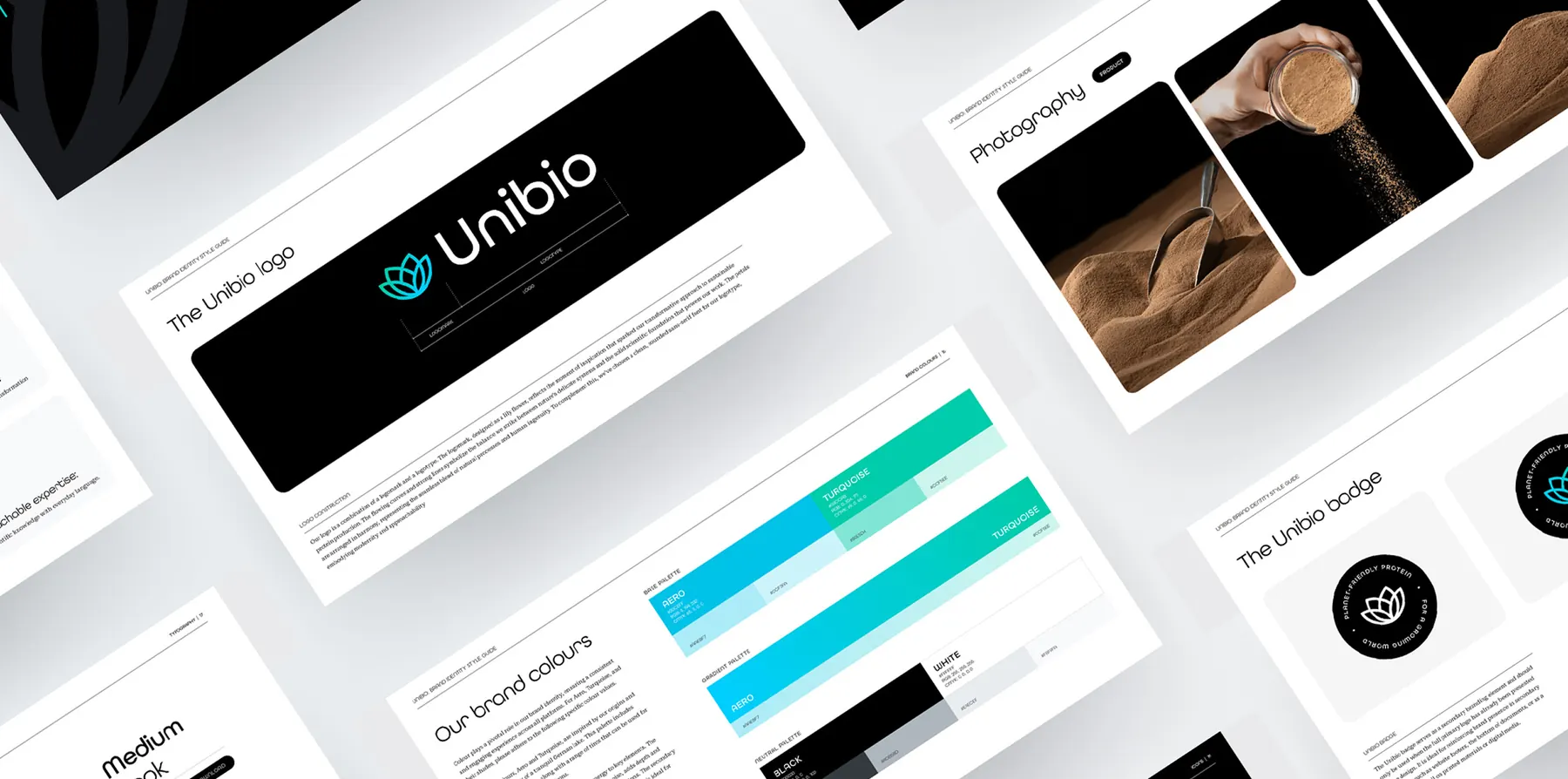
Unibio is a gas fermentation company. Brighter Future repositioned it around its protein product, with the technology as evidence. One line carries the position. “Lead with protein. Let the technology prove it.”
The audiences named in the work were investors, feed producers and partners. A feed producer buys protein, an investor backs a business that sells it and a partner builds on it. Protein gives each of them a starting point they already value.
Alignment came before expression. Workshops with the CEO, COO, CTO and leadership team set direction, vision, mission and values. The tone of voice then carried into press, web and collateral, and the website centred on education, partnerships and investment. See the Unibio case.
ERS moved from an initiative to a standard
ERS, previously Wildsense, was building a restoration standard in a market led by Verra and Gold Standard. A standard asks buyers, developers and communities to trust its rules, so the position had to present the organisation as a standard from the first sentence.
The name followed the position. Brighter Future recommended a name change and supported the search, and the ERS team chose Ecosystem Restoration Standard, which states the category directly.
Brand workshops connected community-led restoration with corporate buyers and project developers. We wrote the founder story, purpose and messaging, and built a website with routes for credit buyers and project developers. The launch speech, press releases and brochures carried the position. Founder and CEO Thibault Sorret said, “Our brand is now an asset.” ERS later acquired the Equitable Earth standard and now operates under the Equitable Earth name. See the ERS case.
Each audience measures the company against a different problem
- Investors
Mandate fit, evidence, risk and the path to a larger business.
- Buyers
Performance, supply and the cost of switching.
- Partners
What they would build together and which risks they would share.
- Regulators
Claims read against rules and precedent.
- Recruits
A mission they can commit to and a company that will last.
The Library’s 16 climate investor interviews cover the investor tests in depth. For buyers, we trace each path from first contact to contract and mark where someone else has to retell the company.
We record all of this in a stakeholder map, with each audience, the decision in front of them, the proof they ask for and the first sentence they should hear. The position stays fixed across the map, and pitch narratives and launch plans draw from it.
How a positioning project runs
Collect the current versions
We gather how the company describes itself across decks, web copy, sales emails, grant applications and job adverts, then interview leaders and front-line staff. The differences show where the position has split.
Decide and test
Leadership workshops set the category, value proposition and frame. Climate categories change their vocabulary as markets form, so customer research and live sales conversations test the new language against the words buyers and investors use today.
Teach it to the team
Storytelling workshops take each team through the position. It then carries into investor storytelling, launch planning and leadership communications.
Check whether positioning is the first problem
- The company has moved on, through a new first customer, a move from pilot to commercial sale or a raise aimed at a new type of investor, and its description still reflects an earlier stageStart with positioning.
- The stall comes from evidence, economics, infrastructure, authority or timingWork on that first. A new position leaves it in place.
- Something is wrong and it is still unclear what needs rebuildingStart with the Belief Gap Diagnostic.
Our diagnostic guide sets out how to tell the first two apart. The Belief Gap Diagnostic sits on Aaron’s own site and is built for the third.
Relevant work
Alongside Unibio and ERS, we took Fair Carbon from brand strategy and storytelling to launch support. It works with blue carbon projects and coastal communities. For Eeden, in textile recycling, we developed pitch strategy and storytelling for a partnership pitch to a major fashion brand, and Eeden states that this work directly contributed to securing a Letter of Intent. The Eeden case study sets it out. For Fronterra, a forest carbon and biodiversity operator in Peru, we repositioned the company around what its team originates, engineers and operates. The Library’s 110 founder and investor interviews, published since 2022, inform how we read categories and audiences.

Frequently asked questions
What is the difference between positioning and branding?
Positioning decides what the company is, who it serves first and which frame it competes in. Branding expresses that decision through identity, language and design, which our Climate Tech Branding Studio page covers. We settle the position first because every later asset depends on it.
Do we need a new name to reposition?
Sometimes. A name change makes sense when the current name ties the company to a position it has left. ERS, above, is one example.
What if our leadership team disagrees about what the company is?
Disagreement is often the reason to start. Workshops put the options and their evidence side by side, and the leadership team chooses one. The rest of the company then works from it.
Can you run storytelling workshops for our wider team?
Yes. Once the position is set, workshops take teams through it and through the origin, purpose, vision, customer, product and impact stories behind it. Each team practises telling it in its own settings, from sales calls to hiring conversations.
Related guides
By Aaron C. Leaman, founder of Brighter Future Studio. Updated 27th September 2026.