 01
01
 02
02 03
03 04
04What the site has to do
Brighter Future designs websites for climate tech, nature, biotech and science-led companies where the page has to carry real evidence. That makes each site part positioning, part evidence architecture and part design system.
Two common failures
Technical teams often have plenty of content and weak hierarchy. The homepage tries to serve investors, buyers, scientists, partners, talent and the public at once. Important evidence sits in PDFs. The product is described from the inside out. Every section is technically true, and the visitor still has to work out why it matters.
The opposite failure is just as common. A polished site strips out the technical substance a serious buyer needs to diligence the claim.
We design two depths
- Decision layercompany definition, problem, proposition, use cases, key proof and next action.
- Evidence layermechanism, methods, technical detail, limitations, sources, deployments and deeper documentation.
A first-time visitor understands the company quickly, and technical or institutional readers have somewhere credible to go next. The homepage makes the company legible and leaves the proof to the rest of the site, where each visitor inspects what matters to them.
Routes through the site
Corporate buyers
- 01Homepage
- 02Application
- 03Deployment
- 04Technical proof
Investors
- 01Proposition
- 02Market
- 03Traction
- 04Team
Scientists
- 01Methods
- 02Publications
What we work on
- Information architecture and page strategy.
- Homepage proposition and first-scroll hierarchy.
- Technical and scientific copy.
- Use-case and application pages.
- Evidence, deployment and case-study architecture.
- Diagrams and visual explanation.
- Responsive visual design.
- CMS structure and reusable content patterns.
How we structure technical claims
We separate four things that often blur together.
- Claim
What the company says is true.
- Evidence
What supports that claim.
- Boundary
Where the evidence stops.
- Implication
Why it matters for the audience’s decision.
This matters most on climate, biotech, biodiversity and carbon-market sites, where overstating the science creates a trust problem beyond the reach of design.
Website design for emerging categories
If your category is new to visitors, the site has to build a bridge from a problem they know, through the current workaround and its limit, to the mechanism and what changes because it exists. How Science-Led Companies Explain a New Category sets out the method.
Search and AI discovery
We design for people first, then make the same structure easy for search engines and AI systems to retrieve. That means descriptive headings, clear entity language, direct definitions, crawlable text, useful internal links, accurate titles and descriptions, canonical URLs and structured data that matches what a person can see. Original evidence and clear explanatory structure drive discovery.
When a smaller job is enough
If the proposition still changes weekly because the customer is unvalidated, a large site can freeze the wrong story. A focused landing page or a research sprint may be enough.
How a website project runs
- Decision and audience map
We set what the site must help happen, who needs to move and what proof each audience requires.
- Information architecture
We decide the page system and the route through the evidence before designing screens.
- Narrative and copy
We write the visible proposition and the deeper evidence layer together, so the design responds to real content from the start.
- Design system
We build typography, layout, imagery, diagrams, interaction and components around the information the company needs to publish.
- Build, QA and handover
We test responsiveness, links, forms, metadata and the content system, then hand over a site the team can run.
What a visitor should be able to answer
- What is this company?
- What problem is it solving?
- How does the mechanism work?
- Who is it for?
- What evidence supports the claim?
- What is still being validated?
- Why is this approach different?
- What should I do next?
Relevant work
- FronterraAn information architecture rebuilt around the questions buyers, investors and partners ask, with project pages that make the evidence easy to inspect.Case study
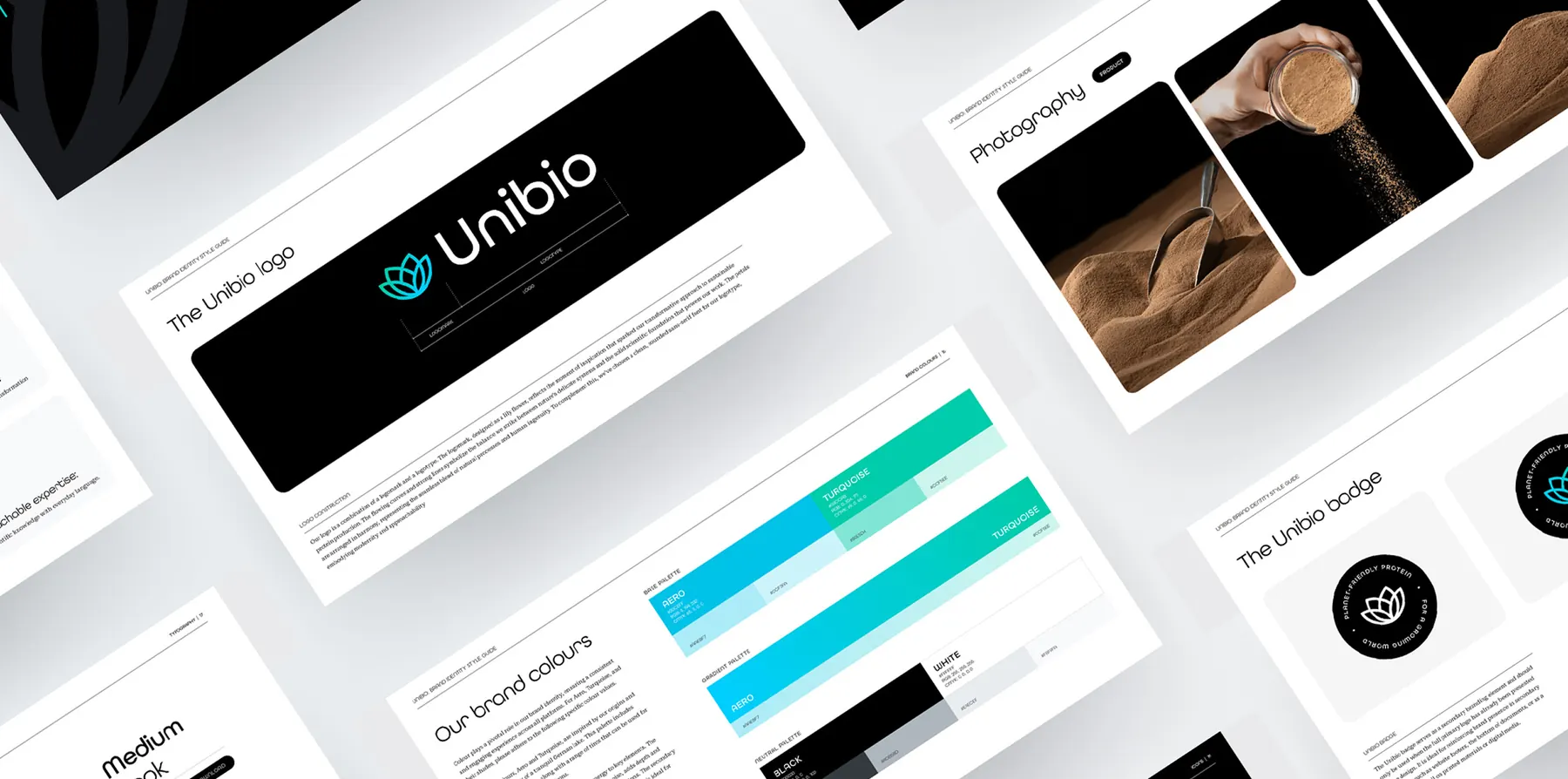
- UnibioA website built around education, partnerships and investment, after repositioning the company around its protein product.Case study

- Gaia AIWebsite design, development and storytelling, explaining its forest intelligence tools to commercial audiences.See the work

- DNAirIdentity, landing page and storytelling for a science-led company working with environmental DNA.See the work
Frequently asked questions
Can you redesign only part of an existing site?
Yes. If the architecture and CMS are sound, the right job may be a homepage, a product or application layer, or an evidence section.
Do you write the copy?
Yes. For technical companies, copy, information architecture and design have to develop together. We write from the team’s own evidence and source material.
Can you work with our developers?
Yes. We can deliver strategy, copy and design into an existing development team, or scope the implementation as part of the project.