 01
01

 02
02 03
03 04
04
Sections
A new material. A biological process. A measurement layer. A financing structure. A deployment model. Each one creates two jobs. Make the unfamiliar legible, then prove why anybody should change what they already do. The common mistake is teaching the entire technology before giving the audience a reason to learn it.
A category needs a reason to exist.
A name helps people classify something. Before somebody learns the new terminology, they need to see the problem, how they handle it today and where that approach breaks. If the category name arrives before the job is clear, you have given the audience one more thing to learn.
Start with a problem the audience already knows how to value.
The fastest bridge into an unfamiliar category is often a familiar constraint.
Four companies, four familiar starting points
- Eeden
Starts with a textile problem. Mixed cotton and polyester are difficult to return to high-value use at scale.
- Ucaneo
Starts with a climate constraint. Some legacy CO₂ still has to be removed alongside deep emissions reductions.
- Ecosystem Restoration Standard
Starts with a trust and execution problem. Restoration projects need credible standards, monitoring and verification.
- Unibio
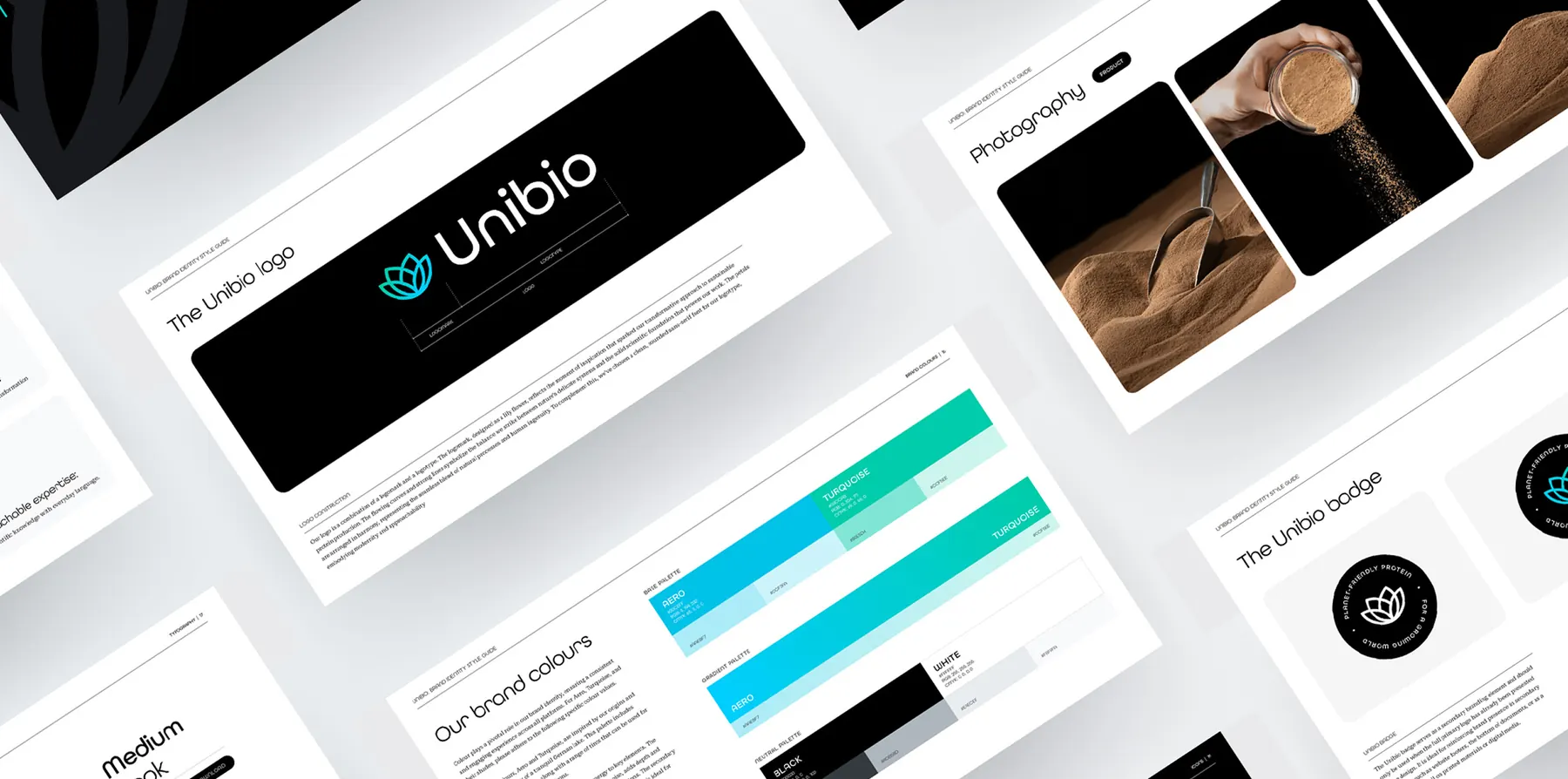
Starts with the need for more resilient protein production, then introduces gas fermentation as the mechanism.
Each company can explain its technology in enormous depth. The category becomes easier to understand when the mechanism is attached to a problem the audience already understands.
Build the bridge in six layers.
- Known problem
What is already costly, risky, slow, scarce or impossible?
- Current workaround
How does the audience deal with it today?
- Limit
Where does that approach break?
- New mechanism
What is different?
- Evidence
What shows the mechanism can do what you claim?
- Decision
What can the audience do now that was out of reach before?
This sequence earns the category by showing why it is useful.
Analogies open the door. Evidence carries the case.
Some unfamiliar technologies become easier to enter through an analogy. “Brewing protein” can make gas fermentation less abstract. The analogy has done its job once the audience knows where to look. It then hands the reader to the mechanism and evidence. A buyer needs performance data, an investor needs economics and scale, and a technical reviewer needs the real system. Good category communication lets somebody enter simply and keeps the simple explanation true to what sits underneath.
Separate the category story from the company story.
A market can understand direct air capture, cultivated seafood or biodiversity monitoring perfectly and still need a reason to choose your company. Category education explains the space. Positioning explains your place inside it.
Early in a category, much of the communication burden may be explaining how the mechanism works. As the category matures, competitors appear and the question becomes why this company. The answer may sit in evidence quality, cost, deployment model, integration, geography, customer focus, commercial model or a different theory of the market. Eventually, the choice turns on those differences.
First-of-a-kind companies need a precedent strategy.
Many emerging categories face the same deadlock.
The first-of-a-kind loop
- Buyers want proof at scale
- Scale requires capital
- Capital wants evidence of demand
- Buyers want proof at scale
The result often looks like a branding or messaging issue because every meeting begins with explanation. Sometimes it is partly structural. Communication makes the first-mover sequence explicit, so each party can see what it is being asked to risk.
Make the sequence explicit
- What does the first buyer need to risk?
- Which proof reduces that risk?
- Which commitment triggers the next one?
Use cases teach faster than definitions.
A definition tells somebody what a category is. A use case shows why it deserves to exist. For airborne biological intelligence, show the decisions it can support, such as biodiversity monitoring, agricultural surveillance, biological baselines and site-level evidence. For circular-textile chemistry, show the material flow and the buyer requirement that changes. In an emerging category, the first strong use cases are teaching devices as well as proof.
Give the website two depths.
Emerging-category sites usually fail in one of two ways. Some simplify so far that a serious buyer loses sight of the evidence. Others put the entire technical record in front of the visitor before establishing why anybody should care. Build two depths.
Decision layer
- Problem
- Proposition
- Use case
- Key proof
- Next action
Evidence layer
- Mechanism
- Methods
- Data
- Limitations
- References
- Technical documentation
The visitor gets comprehension and credibility together.
Naming the category.
A useful category name helps somebody classify the company and stays within what the evidence supports.
Test the name
- Does somebody outside the company understand roughly what territory this belongs to?
- Does the name distinguish the mechanism or job from adjacent approaches?
- Will it still make sense if the company expands?
Sometimes the strongest answer is an established category with a precise modifier. Sometimes a new category is justified. The objective is legibility, and novelty earns its place only when it helps.
Search and AI discovery follow the same principle.
A proprietary category name becomes interpretable to people and machines once the site connects it to the known problem, the established market, the mechanism and the use cases. The fix is explicit explanatory architecture. Clear definitions, descriptive headings, consistent terminology, inspectable evidence, strong internal links and original information worth retrieving.
The one-minute test.
Give the homepage to an intelligent person who works outside the category. After one minute, ask five questions.
- What problem is this solving?
- What is the new mechanism?
- Who uses it?
- What evidence supports it?
- What would I do next?
Reading the answers
- They can explain the technology and miss the decisionYou probably have a positioning problem.
- They understand the decision and struggle to inspect the proofYou have an evidence-architecture problem.
- Both are unclearRebuild the sequence before adding paragraphs.
Draws on Brighter Future’s founder archive and client work.
Tell us what needs to move.
Bring the brief if it is clear. If it is unclear, tell us where the work is stuck.
Bring us the problem