 01
01 02
02 03
03 04
04
Sections
The real test of a brand comes after the launch post goes live. It is whether the team can produce the next investor deck, proposal, case study, event page, product announcement or technical report without rebuilding the strategy from memory, and whether somebody who was not part of the rebrand can make a good decision inside the system. Good handover turns creative work into operating capacity.
The team should inherit decisions, not just files
Logos, fonts and colours are assets. A usable brand also needs rules for the decisions people will keep making. The team should know how the company is defined, who the priority audiences are, which stories exist, what evidence can be used, how claims are labelled, what can flex, what must stay stable and who owns future decisions.
If only the original agency can make the brand work, the system is incomplete. This is especially important in climate and science companies because the communication will keep changing as the evidence changes. A fixed PDF cannot carry the whole brand, so the team needs the strategic source underneath it.
Hand over the deeper stories
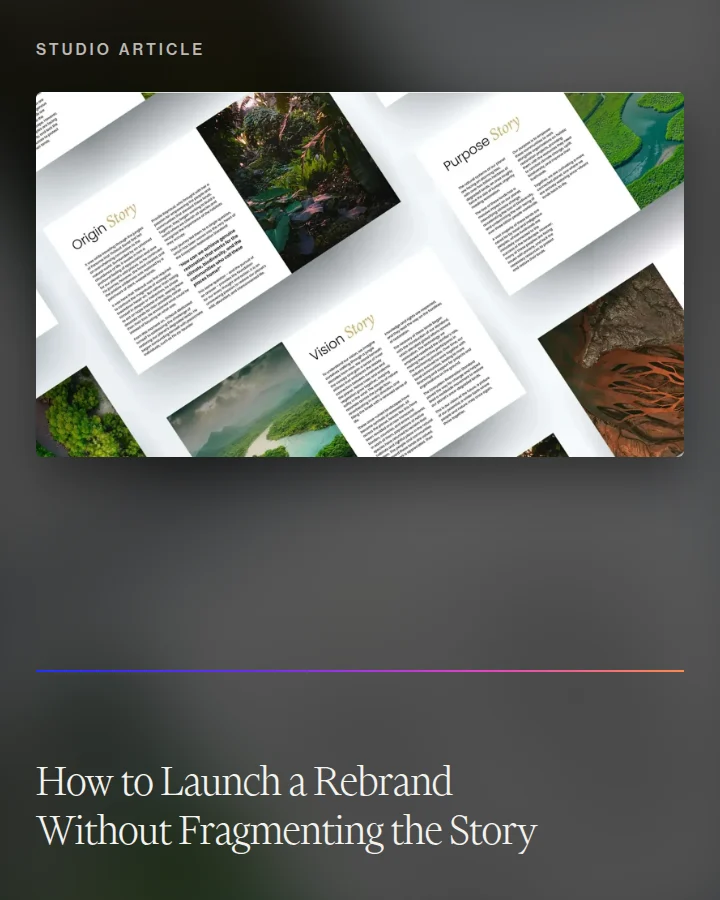
Our Story System gives organisations six source stories covering Origin, Purpose, Vision, Customer, Product and Impact. The point is that the company can draw on these stories whenever a new channel appears, without recreating them from scratch or turning every team member into a storyteller.
Give the team the deeper source and the deployed versions. A founder biography, investor deck, sales page and partnership proposal can then draw from the same truth at different depths. This reduces story drift, makes adaptation safer and gives the words a system alongside the visuals.
Build for the material the organisation actually makes
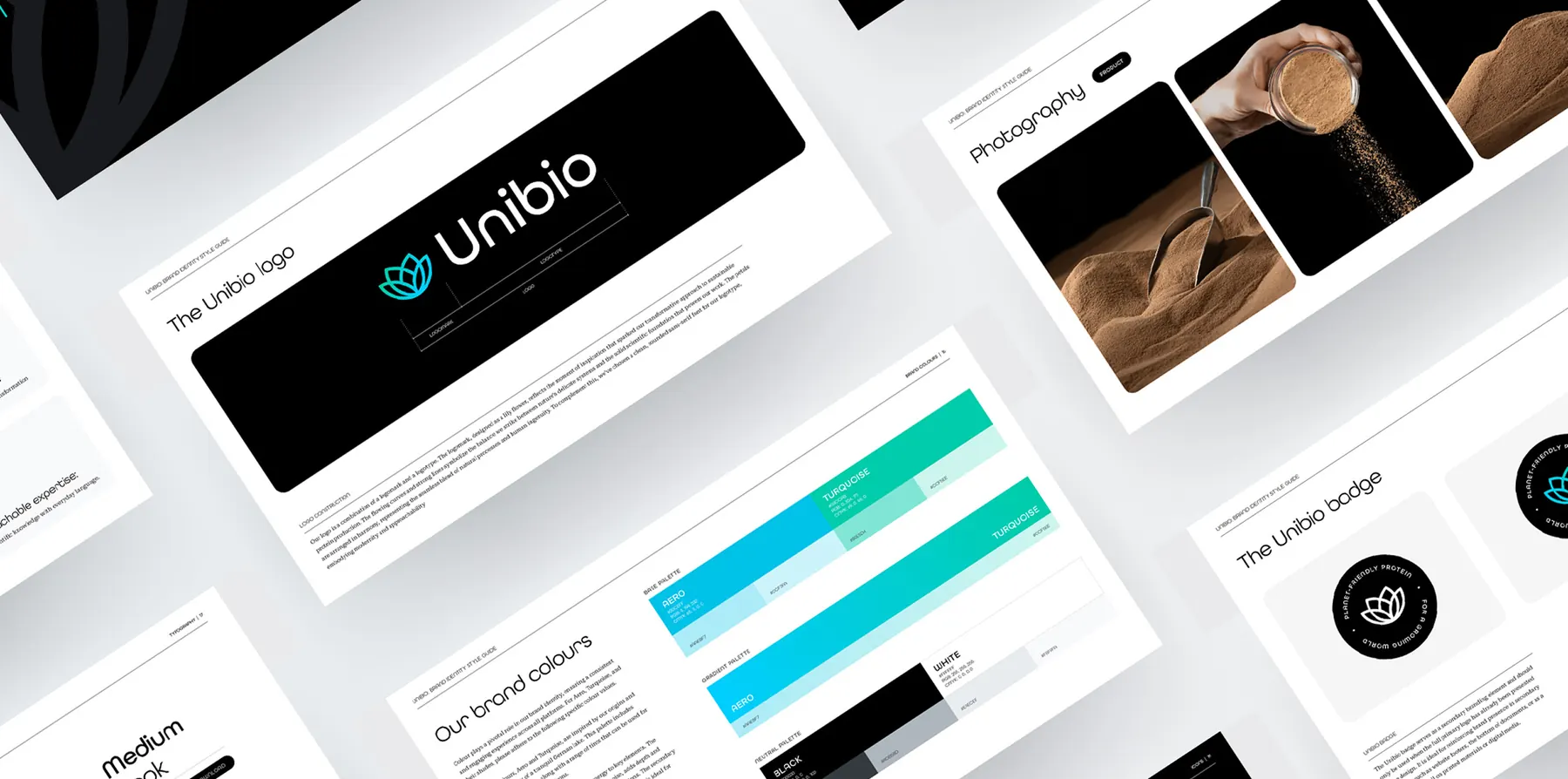
A handover full of beautiful mock-ups can still be useless if none of those mock-ups resemble the work the internal team produces every month. Ask what is recurring, whether that is investor updates, sales proposals, technical one-pagers, conference slides, hiring material, project pages, social graphics or case studies. Build templates and rules around those jobs.
A brand becomes useful when it shortens repeated work. Future assets can still vary, and people can make new material without reopening the foundational decisions every time.
Evidence governance belongs inside the brand system
For climate and science organisations, brand governance includes evidence governance. It settles which numbers require a source, how targets are labelled, how projections differ from achieved results and where limitations appear. It also names who approves technical claims, where source material lives and how an update propagates through the website, investor deck and sales material.
These decisions may sound separate from branding. A brand makes claims, though, and a credible one needs a system for keeping those claims current and proportionate. This becomes more important as more people start producing communication.
Flexibility has to be designed
A rigid system becomes unusable, and an unconstrained system drifts. The useful middle is controlled flexibility, and the point is to know where the flexibility sits.
Typography hierarchy may remain stable while imagery changes. The company definition may stay fixed while proof modules change by audience, and the core position may remain stable while Customer, Product and Impact stories are selected differently for investors, buyers or partners. That gives teams room to communicate without making every new piece feel like a reinvention.
Watch for story drift
Stories should change as the company changes, and that change is healthy. Unmanaged drift is what needs watching. Once a quarter, compare the website, sales deck, investor material, company boilerplate, leadership biographies, recruitment, partner communication, product descriptions and latest press.
Look for what changed intentionally, what changed because somebody improvised and what is now outdated. Check what new evidence belongs in the Impact Story and which audience language is starting to contradict the core position. Update the source before adding another layer of short copy. This small habit prevents the brand from slowly splitting into different versions of the company.
The founder should stop being the brand API
In many growing companies, the unwritten brand lives in the founder's head, and every high-stakes asset comes back for repair. The founder may still own important strategic decisions after a rebrand. They should not need to rewrite the company definition, fix routine pages or approve every ordinary use of the system. One measure of a successful brand is whether that bottleneck begins to disappear.
Ongoing agency support can still make sense when the organisation is evolving quickly, the volume of complex work is high or major launches and capital events are coming. That support should be a choice, and a usable handover keeps it one.
A final test is to give the system to a capable team member who was not involved in the rebrand. They should be able to create a credible new asset, choose the right story, label evidence properly, tell what requires sign-off and explain the company without inventing a new version. If they can, the brand has moved beyond launch and become something the organisation can operate.
Tell us what needs to move.
Bring the brief if it is clear. If it is unclear, tell us where the work is stuck.
Bring us the problem