 01
01 02
02 03
03 04
04
Sections
"Make it simpler" can be dangerous advice. A technical company can simplify the language so far that the mechanism disappears. It can also preserve so much detail that a buyer, investor or partner never reaches the point. The useful goal is clarity with depth. Let the audience understand the situation the product changes, then let serious readers inspect how it works.
Technical teams often explain in the order they built
A technical team naturally starts with the mechanism because that is where years of work, risk and proof sit. The audience usually evaluates in another order. A customer wants to know what is happening in their world, why the current way is difficult and what changes if this works. Only then do they ask how it does that.
This is why our Story System separates the Customer Story from the Product Story. The Customer Story moves through Overload, Sacrifice, Trap and Longing. It ends before the product arrives, because the point is recognition. The Product Story begins where that leaves off, with Moment, Mechanism, Outcome, Transformation. The mechanism still matters. It simply arrives after the audience understands why it matters.
Features are nouns. Buyers are usually looking for verbs.
Technical products are full of nouns such as sensors, reactors, models, filters, sequencing and APIs. The audience is trying to understand what changes. That might be what becomes faster, visible or cheaper, what can be measured now that could not be measured before, what risk changes or what decision becomes possible. A useful Product Story connects the mechanism to that changed moment. A list of features leaves the audience to infer the value.
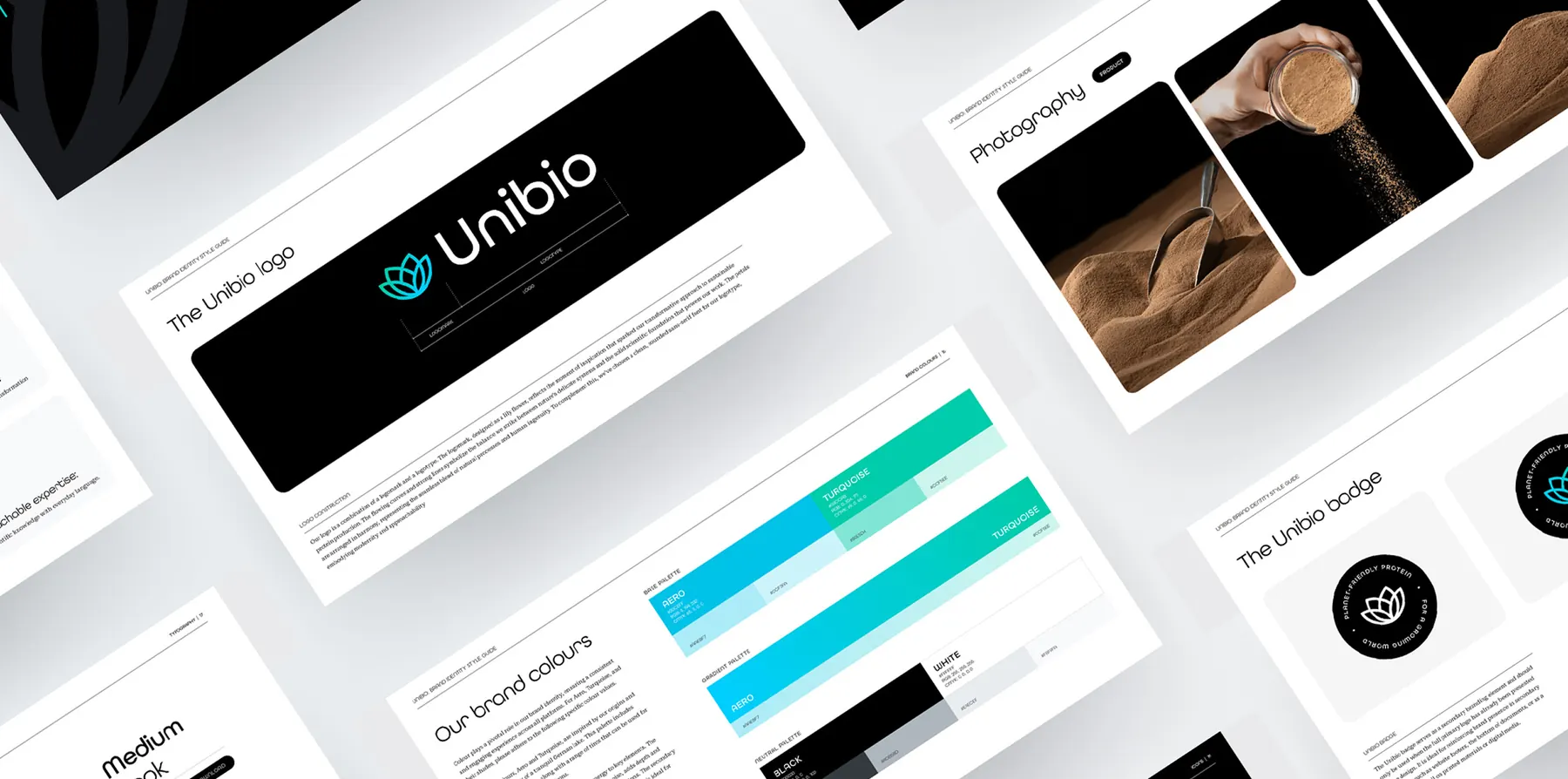
Unibio shows this. The company had deep expertise in gas fermentation, and the technical story was real. The strategic issue was order. Investors, feed producers and partners first needed to understand the protein product and the market around it. The shift put that order into two short sentences.
Lead with protein. Let the technology prove it.
Gas fermentation stayed important. It became the reason the product was possible and defensible, and it stopped being the first thing every audience had to decode.
Build a clear first layer, then a serious second one
DNAir presents another version of the problem. The company works with airborne environmental DNA. The underlying science can become technical very quickly, but the mechanism can still be made legible as a sequence.
Capture → Recover → Sequence → Identify → Interpret
That sequence gives the audience a mental model. On the first scroll, a buyer needs to understand that biological material in the air can be captured, recovered, sequenced, identified and turned into evidence. The molecular detail can wait for deeper pages that explain sampling, recovery, sequencing, analysis, validation and limitations.
We often think of this as a decision layer and an evidence layer. The decision layer helps the reader orient around the problem, use case, proposition, key proof and next action. The evidence layer allows a serious reader to inspect mechanism, methods, data, assumptions, limitations and references. Both layers need to agree. The first should not exaggerate, and the second should not punish a first-time reader.
Plain language is concrete language
Technical writing often becomes vague while trying to sound simple. Words such as platform, solution, ecosystem, leverage and seamless are allowed, and they are also warning lights. They often appear when the writer has stopped describing what actually happens.
"An integrated biodiversity intelligence platform" may be accurate. "Air samplers collect environmental DNA that is sequenced and matched to organisms across a site" gives the reader far more to work with. Plain language allows a smart non-specialist to build the right mental model, and it can still be technically precise.
Neuroscience rewards specificity, not hype
The neuroscience behind story is sometimes summarised as "stories make people emotional". The more useful idea is mental simulation. Concrete sensory or motor detail can recruit regions associated with the described experience. Research on neural coupling also suggests that successful communication can involve patterns of listener activity tracking the speaker.
The practical implication is modest. Give the audience something specific to picture. For a technical product, that might be the sample entering the instrument, the material moving through a process, the moment a report changes a decision or the physical environment where deployment happens. Concrete detail gives abstraction a body, and it needs no magic memory statistic to be useful.
Keep the evidence boundary visible
Clarity becomes dangerous when simplification hides uncertainty. A technical product may be demonstrated, validated, in validation, projected, targeted or hypothesised, and those states should look different. The audience can handle nuance when the structure is clear. In many cases, visible boundaries increase trust because the organisation shows it knows where the evidence stops.
A useful first-paragraph test is to ask whether a smart person new to the category can answer six questions. They need to know who is dealing with the problem, what those people are unable to do today and what changes when the product appears. They also need to know what mechanism makes that change possible, what evidence supports it and where they can inspect the deeper science.
If the mechanism is clear and the first three questions are not, the story is probably inside-out. If the first three are clear and the evidence disappears, the story is probably too thin. The goal is a clear route from human situation to technical proof.
Tell us what needs to move.
Bring the brief if it is clear. If it is unclear, tell us where the work is stuck.
Bring us the problem