 01
01 02
02 03
03 04
04Work / Case study
DNAir
Make a big vision concrete enough to act on.
DNAir captures DNA from the air to show what lives around a site, from biodiversity to pests and pathogens. The science had already reached The Economist and The Guardian. The website and identity still described a smaller company.
- Situation
- A new category and first offers
- Audiences
- Industry, public bodies, research partners
- Leadership involved
- Co-founders
- Work
- Positioning, identity, website, pitch
The problem
A new category in the wrong box.
DNAir’s founders were building a new kind of data company.
Airborne environmental DNA can inform biodiversity management, agriculture, biosecurity, public health and infrastructure. The founders wanted to collect biological data from the first hundred metres of air, at scale.
The old single-page site described biodiversity monitoring, so visitors placed DNAir alongside the monitoring services it wanted to move beyond. The name caused trouble too. People wrote it in one case and could not tell how to say it.
The founders named the challenge themselves. They needed to keep the size of the vision and still give each audience something concrete.
The vision needed a concrete way in.
The shift
A new frontier in biological intelligence.
We positioned DNAir around what air eDNA makes possible, then led each audience to a concrete use. The founders chose “biological” over “environmental” so the line would also hold public health.
The process
Five decisions that shaped the work.
Workshops and review rounds with the founders settled five decisions. They shaped the site and everything that followed it.
- 01Lead with what air eDNA reveals, then the applications.
- 02Show why to work with DNAir in place of how the sampler works.
- 03Give newcomers a first step, from a feasibility study to a pilot.
- 04Claim only what the data supports.
- 05Open a route for solution providers who want air eDNA in their own offer.
The identity
DNA and air, in one word.
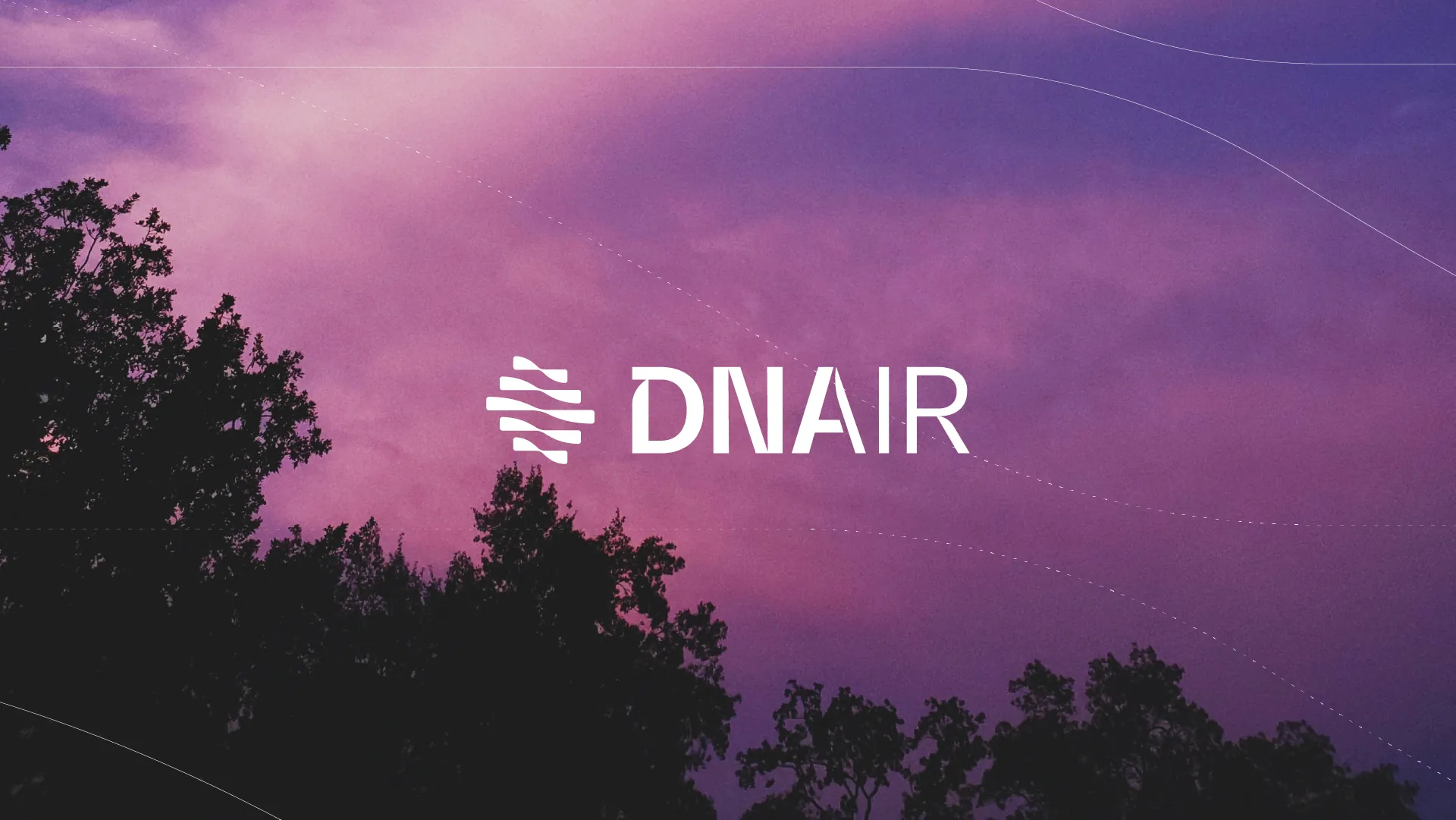
The name stayed. The typography solved it.
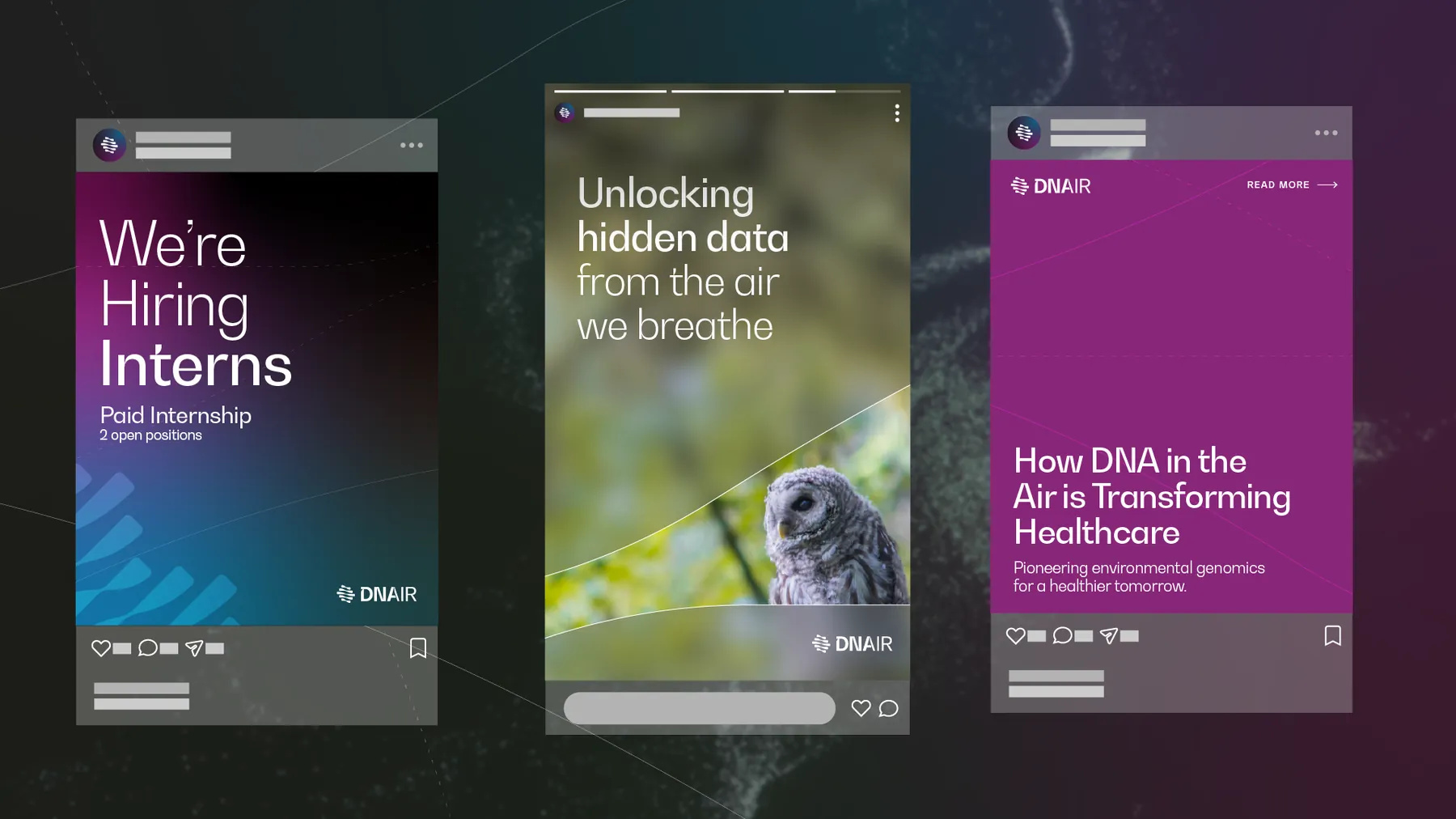
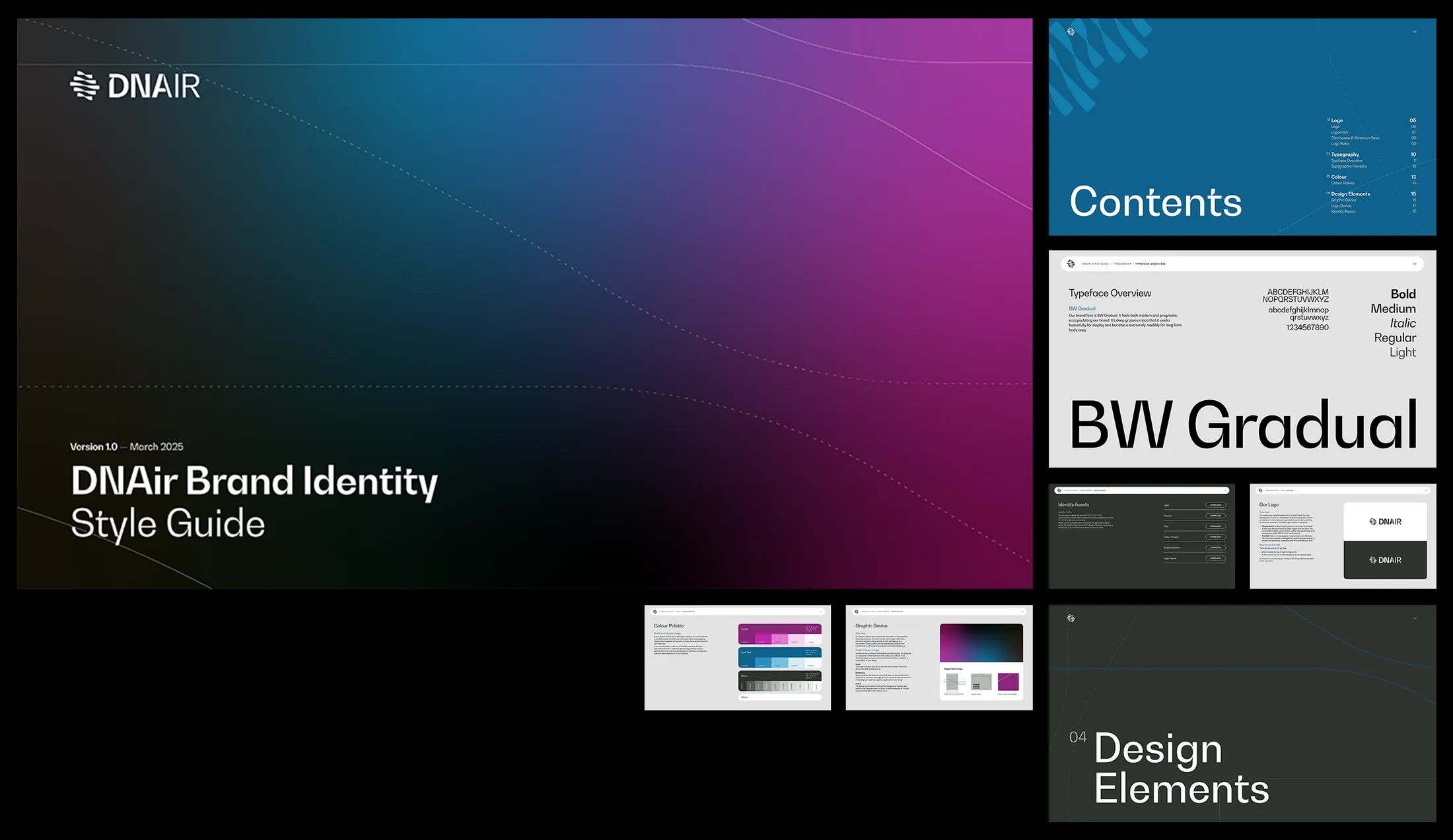
The wordmark splits at the centre of the A, with one side heavier than the other, so it reads as DNA and Air at once. The icon is a helix drawn with loose, wavy strands that suggest airflow.
The founders wanted to stand apart from the greens common across nature tech. The palette pairs purple with dark teal, and the typeface, BW Gradual, keeps the system modern and practical.
The website
One page that opens up the field.
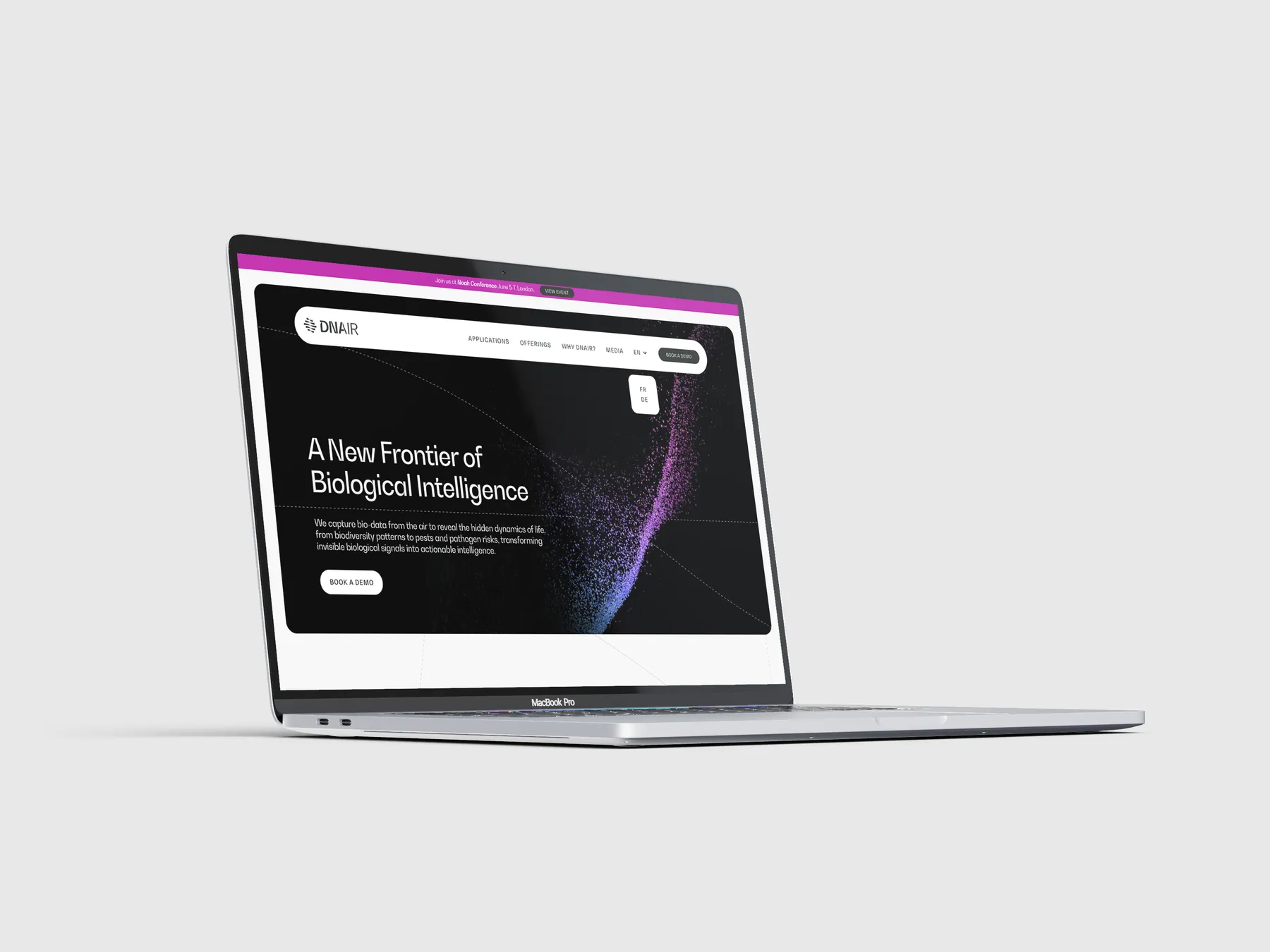
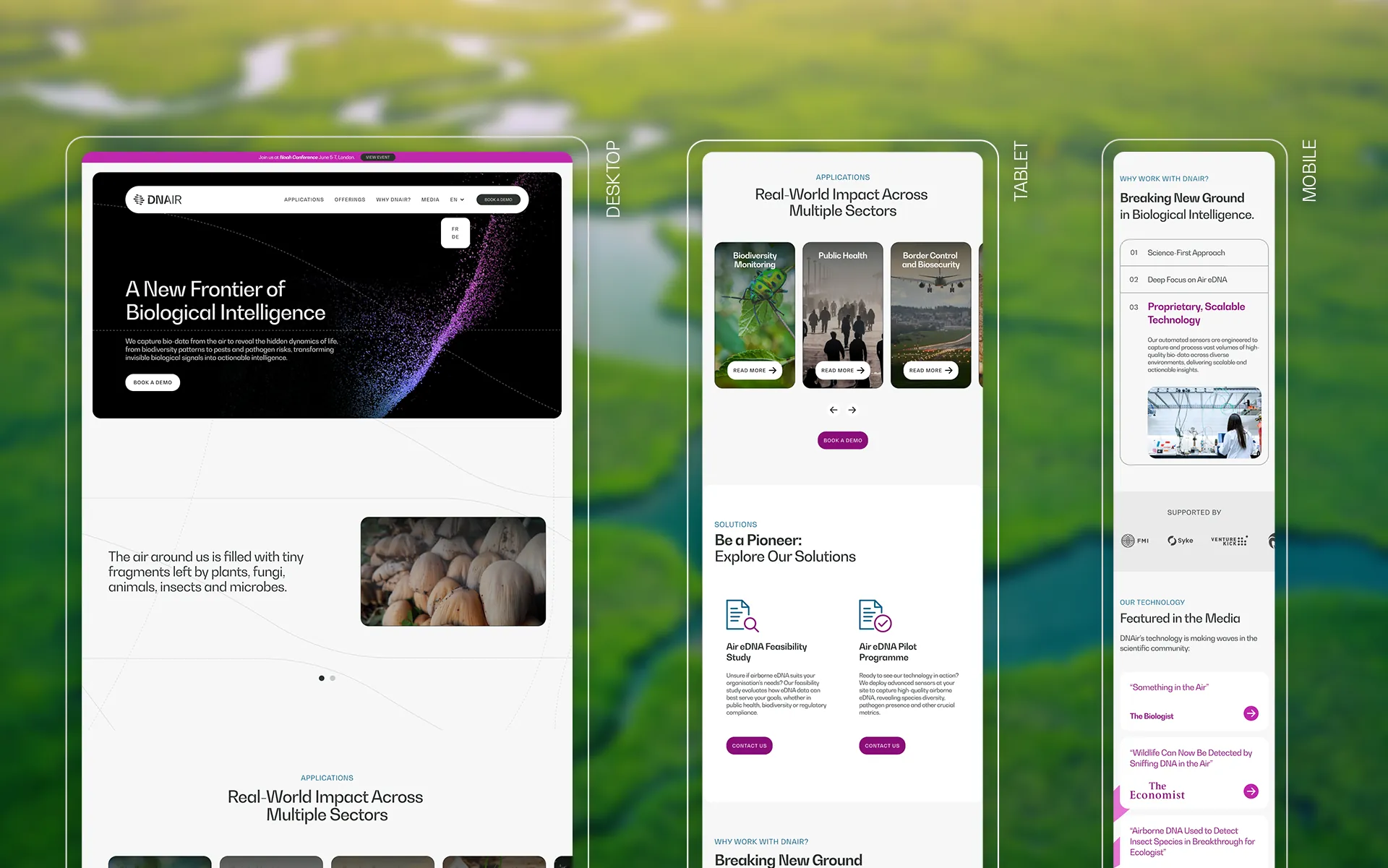
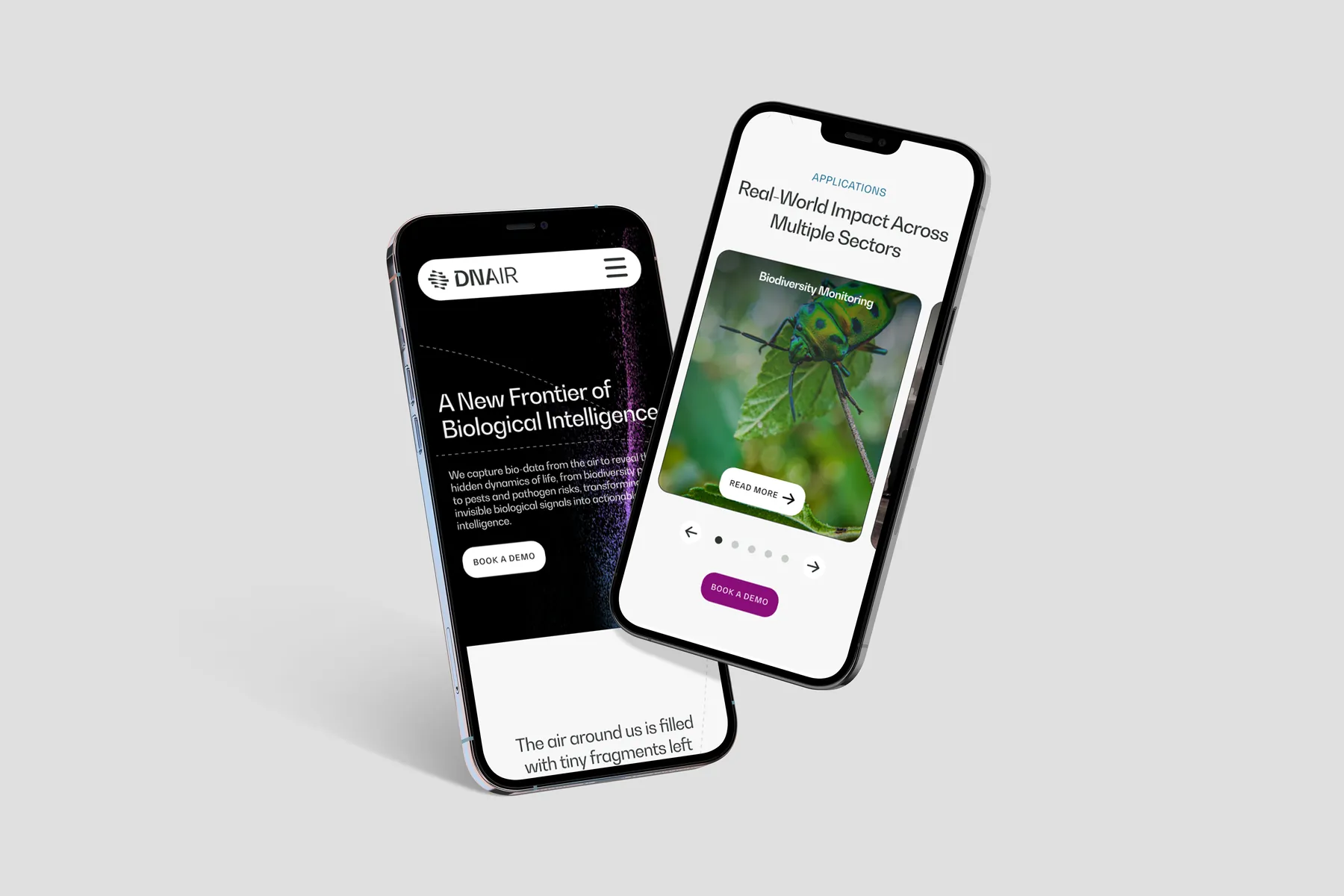
We wrote and built a landing page in Webflow. It opens on the air around us and what it carries, then moves to six application areas, each with a concrete use. Three entry offers, from a feasibility study to a pilot, give organisations new to air eDNA a first step.
Before
“Measuring DNA in the air to assess biodiversity. Fast, accurate, and scalable.”
DNAir’s single-page site, 2024
After
A New Frontier in Biological Intelligence
The new site, still live in 2026
- The air around us
- Applications
- Solutions
- In the media
- Why DNAir
- Contact
The pitch
The same frontier, on stage.
DNAir reached the final of the >>venture>> 2025 startup competition in Switzerland.
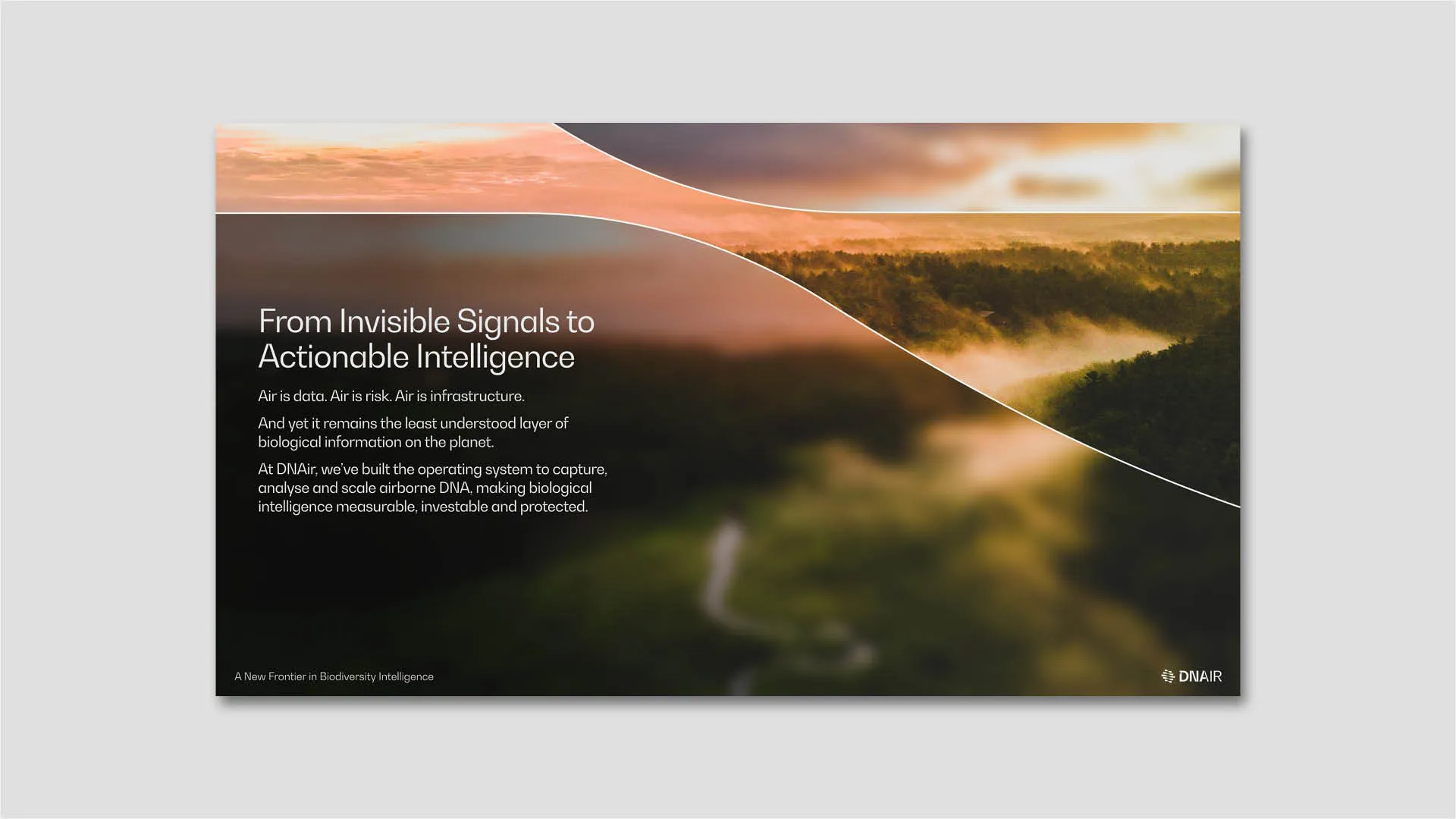
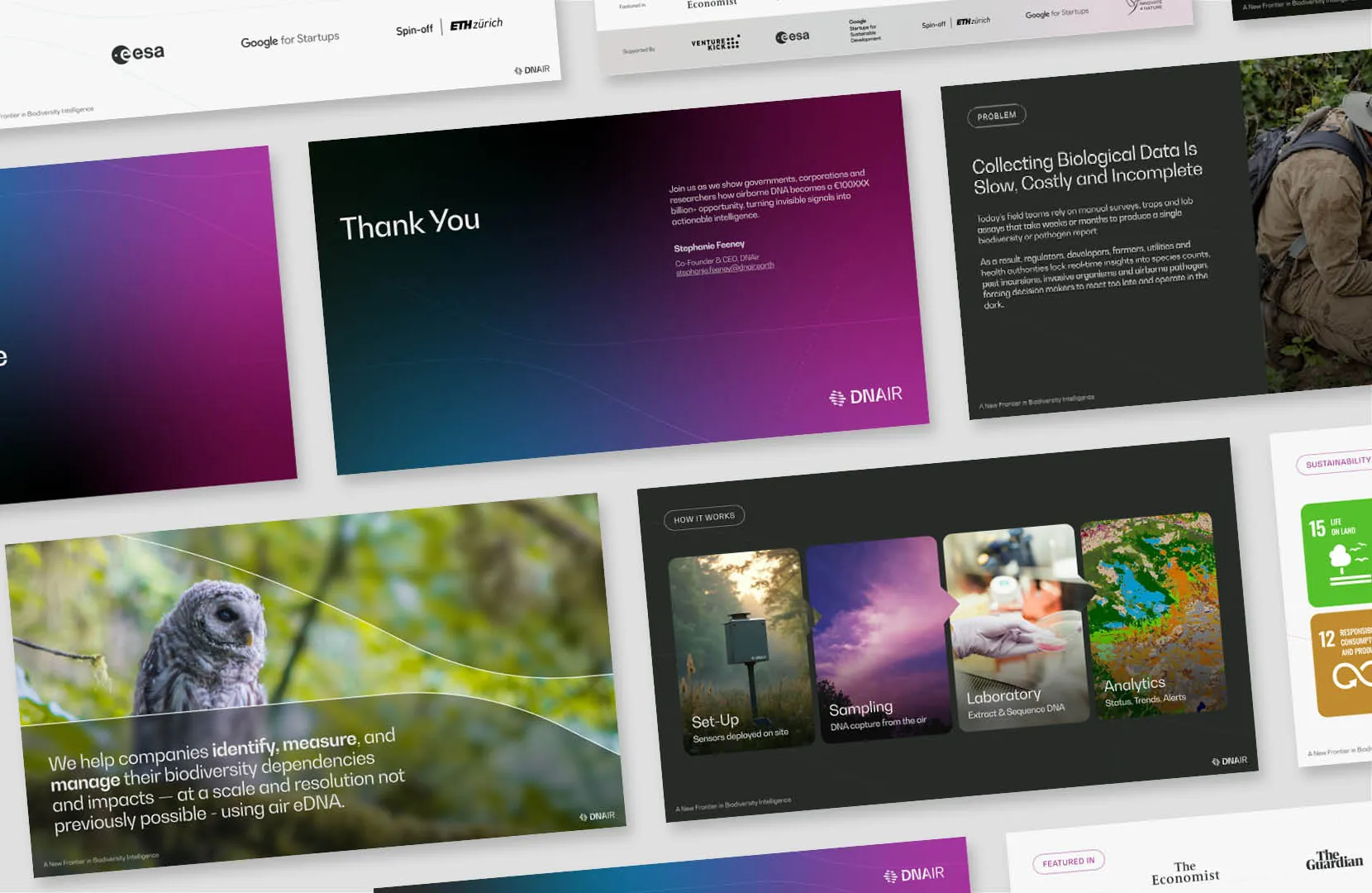
By then the founders had carried the positioning into their own pitch. We wrote the final speech with them and redesigned the deck around it.
The speech moved between feeling and logic. It opened by asking the room to take one breath, then told them what that breath had carried in, from spores and soil microbes to the wolf that passed through at dawn. A satellite comparison did the explaining. Satellite imagery once made the surface of the Earth visible, and governments, farmers, insurers and energy companies now buy it to make decisions. DNAir set out to do the same for biological data.
The founders kept every claim inside the evidence. Lines that promised early warning, or described data the sensors had yet to collect, came out of the script.
DNAir took second place in the Social and Environmental Impact category. The jury wanted more field evidence than a company a few months into its first pilots could show. The story won the room’s attention. The next stage needed data from the field.
A pitch can make a vision credible. Field evidence carries the decision.
What changed
One vision, many entry points.
DNAir came away with a name people can read and say, an identity that stands apart in nature tech, and a site that turns a broad vision into concrete uses and first offers.
DNAir kept the size of its vision and gained a way in.
What happened next
DNAir has kept building since the work, and its site still leads with the same line. These are later developments, reported publicly by DNAir and the organisations involved.
- May 2025
Joined the ESA BIC Switzerland space incubation programme.
- June 2025
Second place in the Social and Environmental Impact category at the >>venture>> 2025 final.
- September 2025
Selected for the Rio Tinto and Founders Factory mining technology accelerator.
- October 2025
Presented at IMARC 2025 in Sydney, and began work with the Migros Pioneer Fund to bring its sensors to market.
- November 2025
Backed by Fondation Valéry for an ETH-led study with the Federal Office for the Environment, comparing air eDNA with national biodiversity monitoring at ten Swiss sites. An Innosuisse project with ZHAW on an active air sampler followed.
- 2026
Exhibited at Scientifica in Zürich. The team has grown to eight.
From the LibraryHow Science-Led Companies Explain a New Category