 01
01 02
02 03
03 04
04Sections
The cost of brand and pitch work for a deep tech company depends on how much has to be decided before anything is designed. A studio can quote a deck or a website quickly. The larger cost sits in the thinking underneath, which covers who the company is for, what it claims and what evidence carries the claim. When that thinking already exists, the work is mostly production. When it is missing, most of the fee goes on building it.
Founders preparing a Series A often ask for a price before either side knows which of those two situations they are in. This piece sets out how the work is usually structured, what moves the cost and how to compare proposals that look alike on paper.
Three ways studios structure the work
Most studios that work with deep tech and climate companies use some mix of three structures.
A fixed diagnosis comes first. It is a short, bounded piece of work that finds where belief breaks down with investors, buyers or partners and says what needs to change. At Brighter Future this is the Belief Gap Diagnosis, and its fee is credited against larger work that follows directly.
A project fee covers a defined outcome. Positioning and messaging, an investor deck, an identity or a website each sit here. The scope names the outputs, the rounds of revision and the people involved from the company.
A monthly retainer covers work that keeps moving. A raise running over several months, a launch with many assets or a leadership team that needs support across rooms all fit this shape. Retainers usually carry a minimum term, because the first month is spent learning the company.
Hourly billing is rare for this kind of work. The value sits in decisions, and decisions do not scale with hours.
What moves the cost
Five things drive most of the difference between a small quote and a large one.
The state of the story. A company with a clear position that needs a stronger deck costs less than a company whose investor, customer and website stories describe three different businesses. Aspyre Foods came to us with a pitch built around one product while the company was building a protein platform. That shift had to be settled before any slide could be designed.
The depth of the science. Technical material takes time to understand well enough to simplify without distortion. A studio that has worked on gas fermentation, airborne eDNA or forest carbon before will move faster than one meeting the field for the first time. It still has to read the data, speak to the scientists and check each claim.
The number of audiences. A deck for generalist investors is one piece of work. A deck plus a buyer story, a partner story and a website that serves all three is several. DNAir needed one position that could take industry, public bodies and research partners each to a concrete first use.
Who is in the room. Work that involves the whole leadership team costs more in time and produces more durable decisions. Work that runs through one founder is faster and can be undone later by a co-founder who was not consulted.
What has to be made. Identity systems, websites, video, 3D rendering and launch assets are production. Their cost scales with volume and polish, and it is the easiest part of any quote to compare.
How to compare proposals
Two proposals with the same deliverables can describe very different work. A few questions separate them.
Ask how the studio will find out what investors and buyers currently misunderstand. A proposal that starts with design has assumed the answer.
Ask who will do the thinking and who will do the making. In small studios they are often the same people. In larger agencies the strategist may leave after the first workshop.
Ask what happens when the diagnosis finds a problem branding cannot solve, such as missing evidence, weak unit economics or a timing issue. A studio that will say so is protecting your budget. Our note on when better branding will not fix a climate company covers those cases.
Ask how the work will survive after handover. A deck built from a stable message system can be updated by the team. A deck built as a one-off tends to drift within a quarter.
How to read a deep tech portfolio
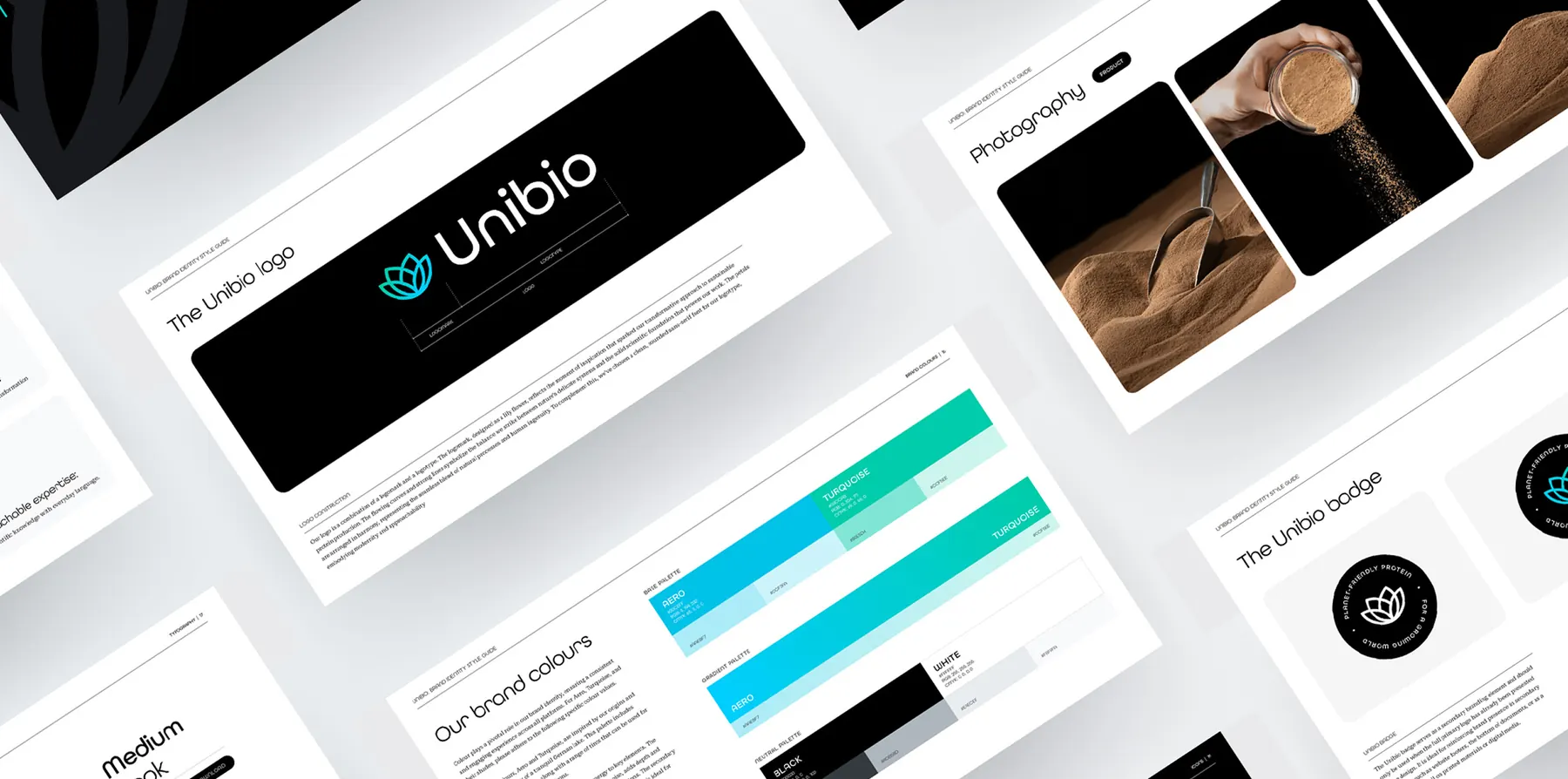
A portfolio shows finished surfaces. The useful signal sits underneath them. Look for case studies that name the problem before the design, show what changed in the story and say which audiences the work was built for. A studio that can explain why a company was repositioned has done the thinking. A gallery of logos and slides says little about whether the team understood the science.
Check the range of science too. A studio that has handled fermentation, sensing, carbon and nature finance has learned to ask the questions technical founders expect. Our work sets out the situation, audiences and shift for each project.
Timing against the raise
The most expensive version of this work is the rushed one. Positioning, deck and website built in the three weeks before first meetings leave no room to test the story with friendly investors and change it. Eight to twelve weeks before a round gives time to diagnose, decide, build and rehearse. Starting earlier also lets the website and the deck tell the same story when an investor checks one against the other.
How Brighter Future prices work
Brighter Future agrees scope, outputs and fees for each project before work begins. When the problem is still unclear, the work starts with the Belief Gap Diagnosis, and the diagnosis decides where the work sits. That might be a single deck, positioning and messaging, or a full brand with identity and website. Our pitch deck design and positioning pages describe what each covers. Choosing a branding studio sets out how we work with founders and where we point them elsewhere.
Tell us what needs to move.
Bring the brief if it is clear. If it is unclear, tell us where the work is stuck.
Bring us the problem