 01
01 02
02 03
03 04
04Sections
Climate-tech commercialisation is a sequence of technical, customer, deployment and financing decisions that runs from a laboratory result to repeat deployment at scale. At each stage a different audience makes the next decision and asks for a different kind of proof, so the story has to mature while the facts underneath stay the same. Early on the question is whether the technology works. Later it becomes whether a customer will use it, whether a project can be delivered and whether the model repeats at economics that attract ordinary capital.
This page is the map. Each stage links to the article that covers it in depth.
Why the stage decides the conversation
The US Department of Energy's commercialisation work separates research, demonstration and deployment because each stage carries a different set of barriers. The International Energy Agency has argued that clean energy innovation needs faster progress, and it breaks down future emissions reductions by current technology readiness category, from mature markets back to the laboratory.
Climate-tech storytelling should follow the same split. A company that knows its stage can name the audience it needs next and the evidence that audience will ask for. Telling every stage with one narrative confuses all of them. The story that earns a pilot rarely carries a first commercial project, and the story that finances a first plant changes again once repeat deployment begins.
The commercialisation map
The table sets out what the story leads with at each stage and the proof that decides the next step. Stage definitions vary by technology, and our explainer on what FOAK means in climate tech places the first commercial project on that ladder.
| Stage | Story leads with | Proof that matters |
|---|---|---|
| Lab | Mechanism | Technical feasibility |
| Pilot | Product and use case | Real-world performance, customer learning |
| Demonstration | Integrated system | Longer operation, qualification, early economics |
| First commercial project | Project | Contracts, delivery, risk allocation, capital |
| Repeat deployment | System | Operating history, repeatable cost and schedule |
Some uncertainties shrink at each step and new ones appear. Technical feasibility gives way to scale-up economics. Customer interest becomes contracted demand. Project risk replaces product risk, and repeatability replaces first-mover ambiguity. A story that acknowledges that shift reads as honest to every audience along the way.
Lab, pilot and demonstration prove the technology and its use
At the laboratory stage the mechanism takes centre stage. The reader wants the scientific or engineering principle, what has been demonstrated and what result would disprove the approach. Early investors and grant funders tolerate high uncertainty here, because they are underwriting a research question and a team. Present a laboratory result as a laboratory result.
At the pilot stage the customer moves forward. The questions become what problem the product solves, what the current workflow looks like, which specification matters, what integration is required and what a buyer will pay. A good pilot tests technical performance and something about customer use at the same time. A technically clean pilot that changes no buyer decision is weak commercial evidence, and our piece on why successful pilots do not always become purchases explains how to design one that does.
Demonstration brings the company closer to representative operation. The reader asks whether the integrated system runs for long periods, whether product quality holds, whether costs and maintenance behave as modelled and whether customers can qualify the output. The IEA has published a guide on advancing clean energy demonstration projects for this stage. Separate what has been demonstrated from what is still modelled, and give every data point its scale, duration and operating conditions.
The first commercial project turns a technology into a project
At first-of-a-kind the object of the story changes. Investors and lenders now evaluate a site, an engineering design, counterparties, permits, offtake, risk allocation, capital and a schedule. Many climate companies discover here that a venture narrative needs rebuilding before it works as an infrastructure narrative. Our piece on moving from pilot to project covers that rebuild.
Three questions dominate this stage. The first is demand, and our guide to offtake agreements explains what a buyer commitment is worth to a lender. The second is capital, since a company can raise equity for years while its first plant stays outside conventional debt, which we cover in fundable versus financeable. The third is risk, and each exposure needs an evidence state and an owner. Canada's MaRS launched a First-of-a-Kind Lab in 2026 to support companies at exactly this step.
Repeat deployment proves the model
After the first plant the question becomes repeatability. The reader wants to know what the first project proved, which costs fall, which design elements standardise, which risks become easier to price and whether the sales and development process repeats. The story shifts towards operating data and evidence of a scalable system. Our piece on FOAK to NOAK sets out what the first project must record to make that case.
The audience widens at every stage
Early investors are comfortable underwriting technology and team risk. As the company moves towards market, buyers, project investors, lenders, engineering partners, insurers and public institutions join the conversation. Each asks a narrower question and wants harder evidence. The story system has to add these rooms without fragmenting. One source of truth sits underneath, with more specialised cuts for each audience.
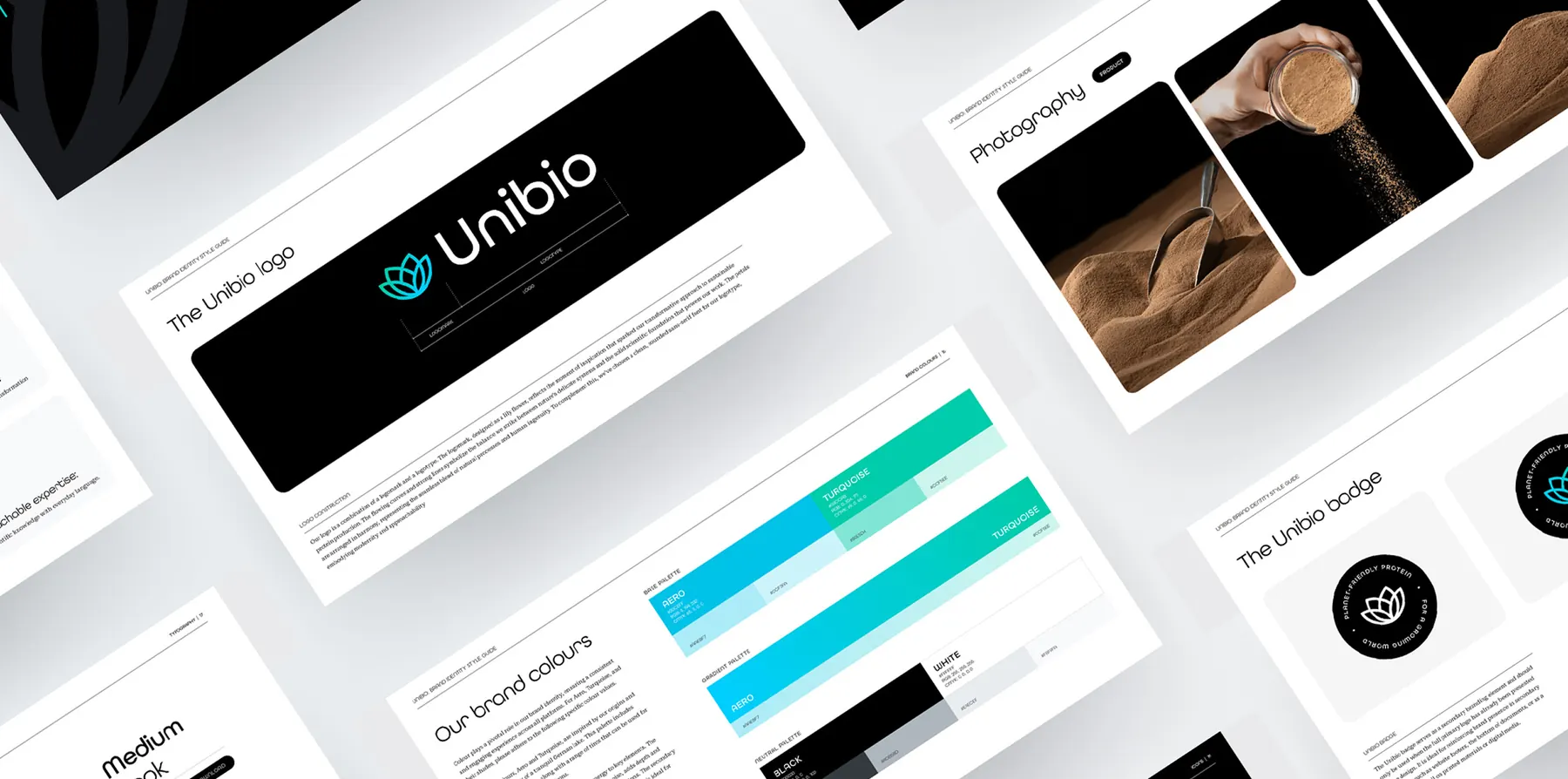
Unibio shows how the lead message can move as the audience widens. Its gas fermentation technology produces protein for feed. Brighter Future helped the company reposition around the protein product, with the technology as evidence, under the line "Lead with protein. Let the technology prove it."
Tell the stage you are at
The most common communication error in commercialisation is presenting an earlier-stage company in later-stage language. "Commercially proven" appears when there is a pilot. "Customer traction" appears when there are exploratory conversations. "Bankable" appears before any project finance has been tested. Each phrase buys a little short-term confidence and creates a diligence problem later.
The real stage is useful information, because it makes the next milestone clear. Capital is easier to understand when the reader can see what it changes. An ask framed as the evidence it will produce, whether a pilot result, customer qualification, demonstration economics, detailed engineering or a first plant, is easier to fund than a generic runway figure. Each round then buys the evidence the following audience will ask for.
Build the narrative around the next decision
Start from four plain statements about the company today. Write the stage you are actually at, using evidence that exists now. Name the party whose decision you need next. List the proof that party requires. Record what has changed in the world that makes their decision timely. Then check your deck and website against those four lines, remove any claim that belongs to a later stage and add the evidence that belongs to this one. Repeat the exercise whenever the company crosses a stage boundary, and the story grows with the business year by year.
Our Unibio case shows how a science-led company can reposition as its audience widens.
Sources and further reading
Tell us what needs to move.
Bring the brief if it is clear. If it is unclear, tell us where the work is stuck.
Bring us the problem